




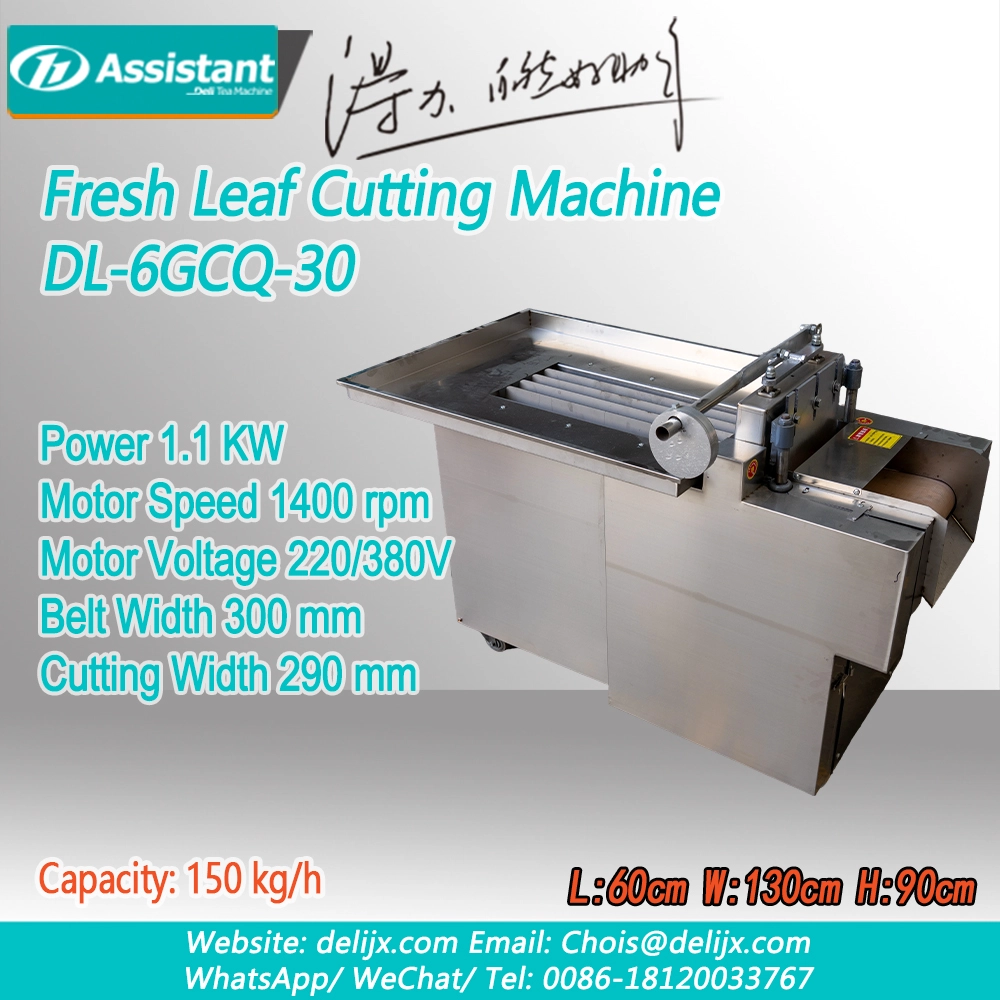
Esta máquina cortadora de hojas frescas corta hojas frescas grandes en trozos pequeños uniformes. Dos modelos disponibles: DL-6GCQ-30 (150kg/h) y DL-6GCQ-50 (250kg/h). Adopta alimentación por cinta transportadora, trabaja con té, hojas de loto, hojas de morera y materias primas a base de hierbas para la producción de té.
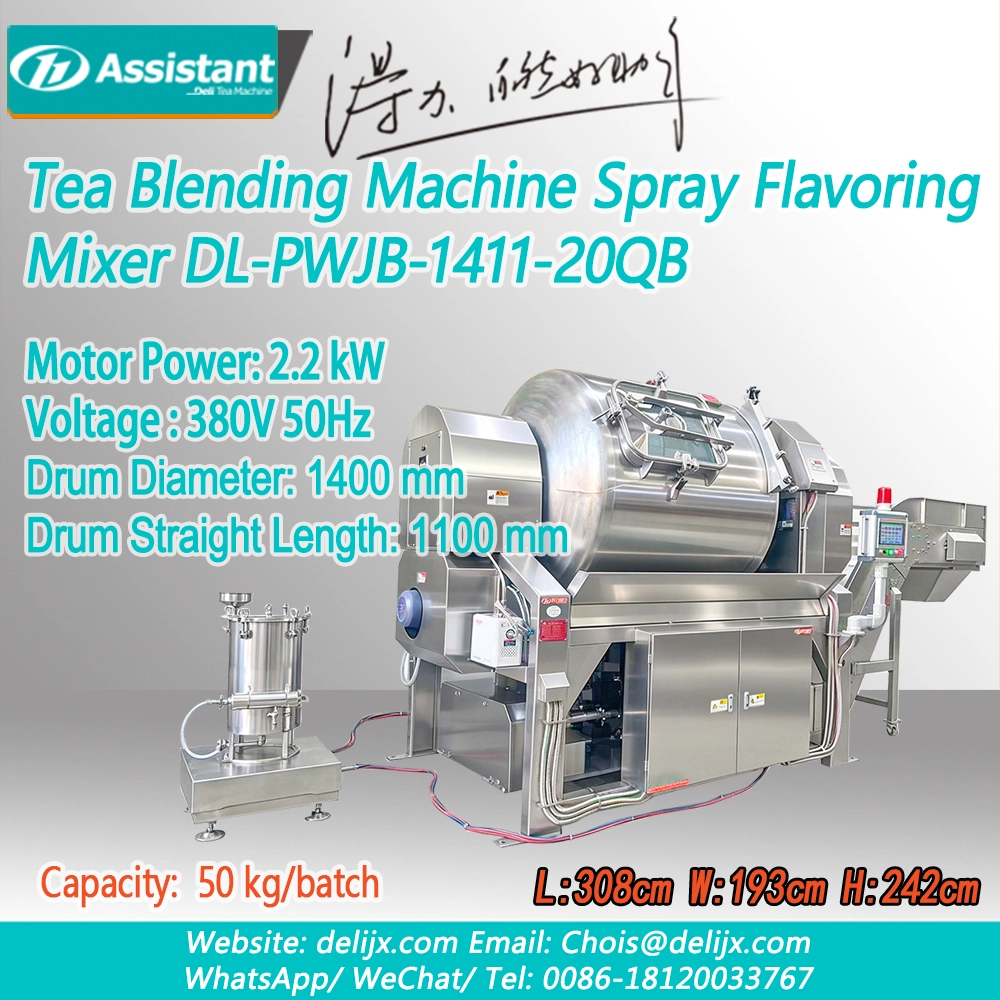
Este mezclador pulverizador DELI ASSISTANT es una máquina mezcladora de té y pulverizadora de aromas de doble función, que se utiliza para homogeneizar montones de té y agregar sabor atomizado en la producción de fábricas de té, con tambor de 1400 mm, motor de 2,2 kW y fuente de alimentación de 380 V.
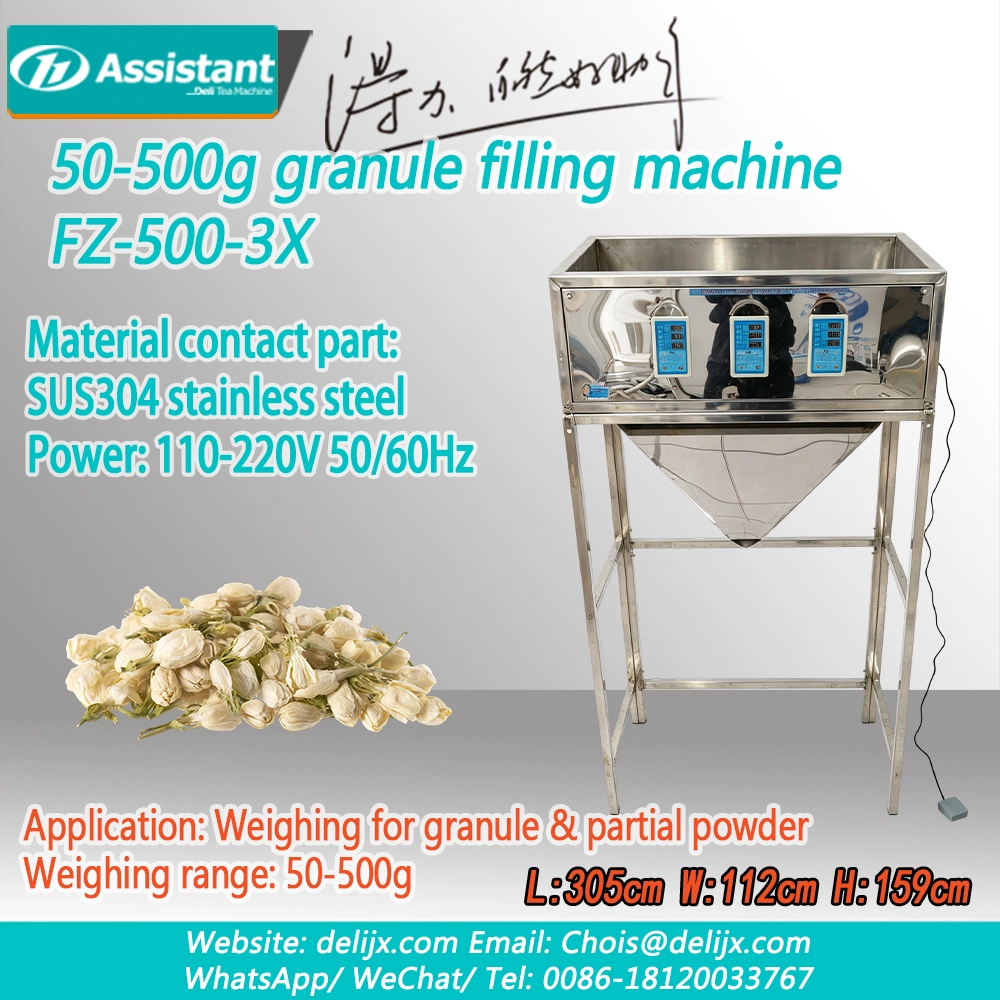
Máquina llenadora cuantitativa automática FZ‑500‑3X, dispensador de pesaje de polvo granulado de 50‑500g para granos de café y té
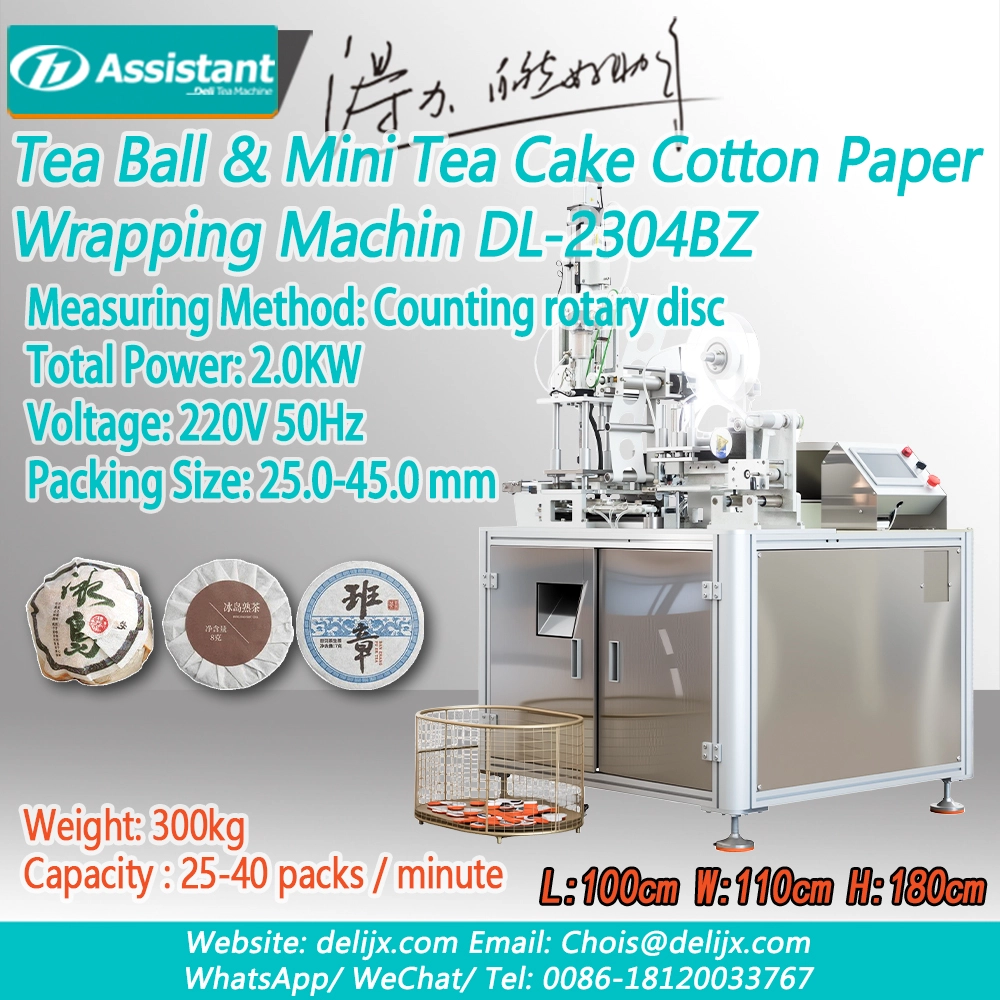
Máquina automática para envolver papel de algodón para té Pu-er dragon perla y mini pastel de té. Control PLC, velocidad de 25 a 40 unidades/min, interruptor de una tecla para bolas de té y pasteles pequeños, funcionamiento servo neumático estable para envasado de té comprimido.
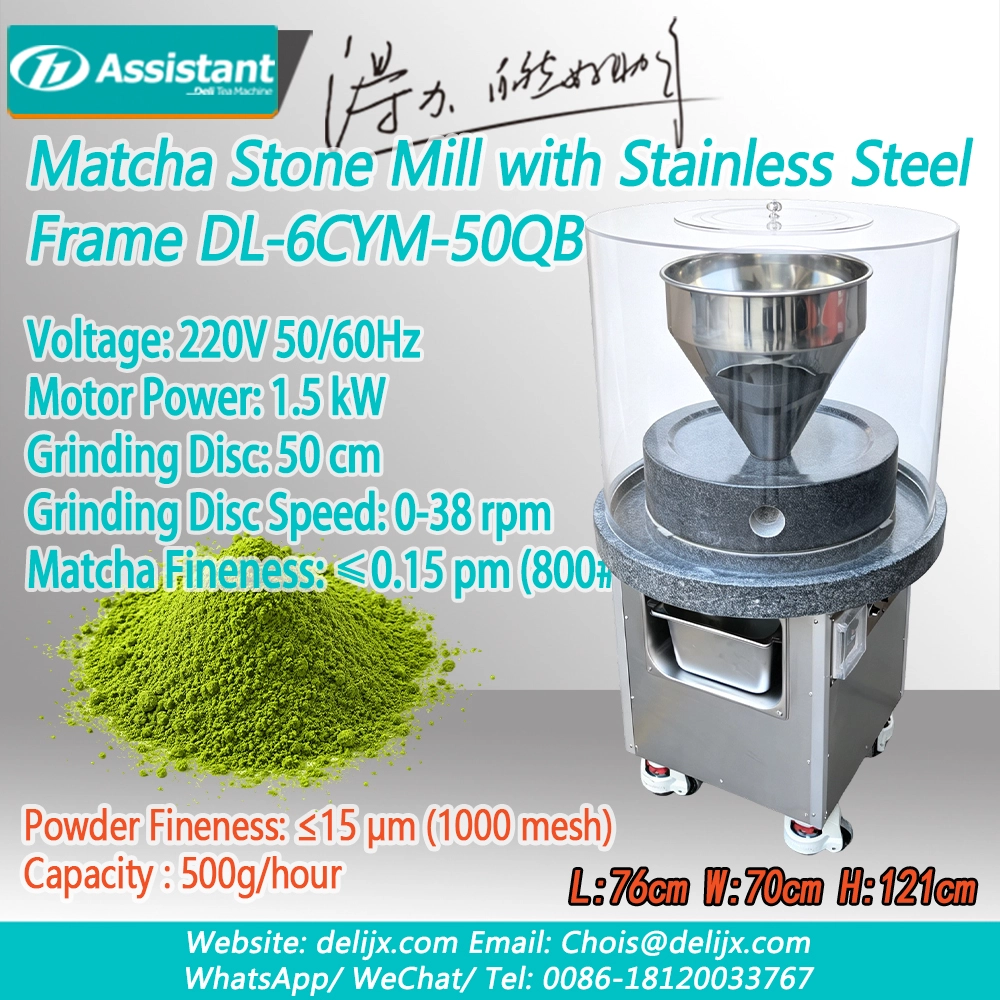
Molino de piedra verde matcha con base personalizada de acero inoxidable 6CMJY-50QB, placa de piedra de granito natural, molienda en frío a baja velocidad. Conserva el aroma del té, produce polvo de matcha ultrafino. Estructura de acero inoxidable con ruedas, adecuada para tiendas de té, laboratorios y producción de matcha en lotes pequeños.
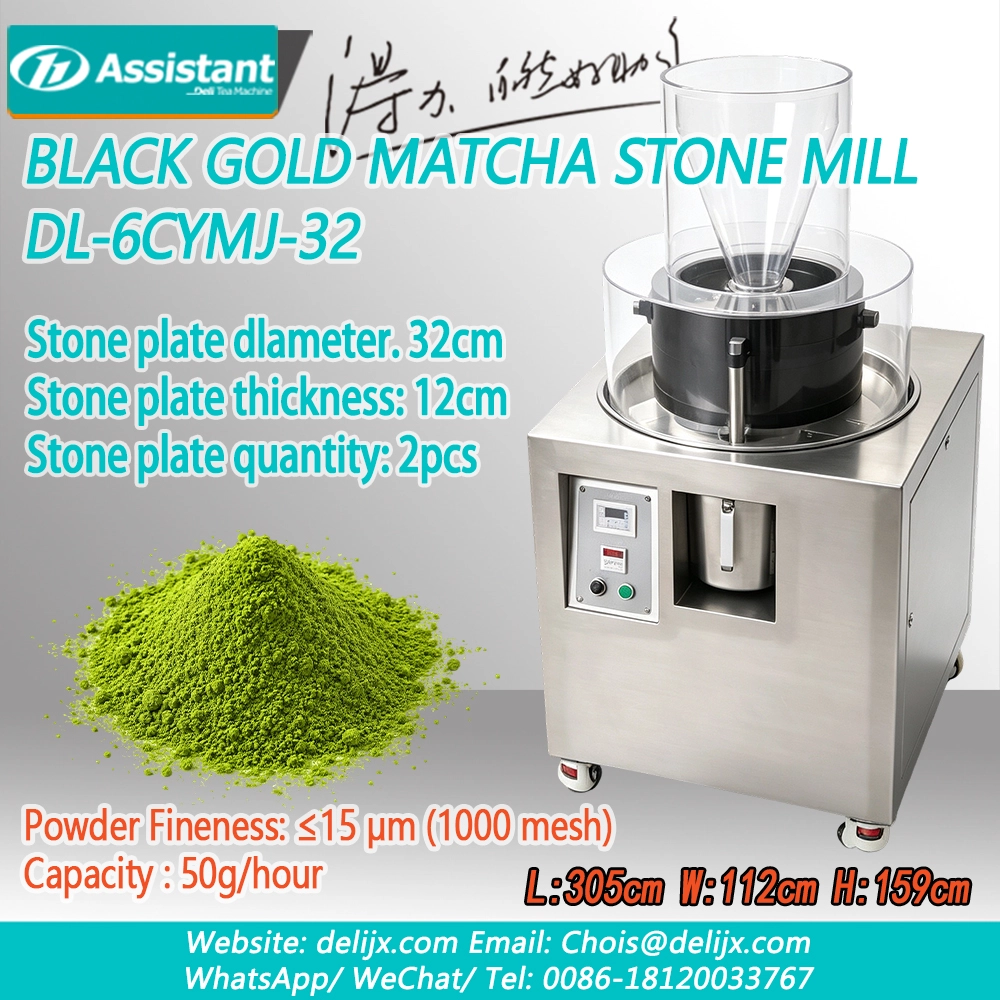
Pequeño molino de piedra matcha elevado personalizado DL-6CYMJ-32W, equipado con placas de piedra natural de 30 cm. Molienda a baja velocidad y baja temperatura, produce polvo de matcha ultrafino ≤15μm. Capacidad de 50 g/h, cuerpo de acero inoxidable, ideal para tiendas de té boutique y producción de matcha en lotes pequeños.
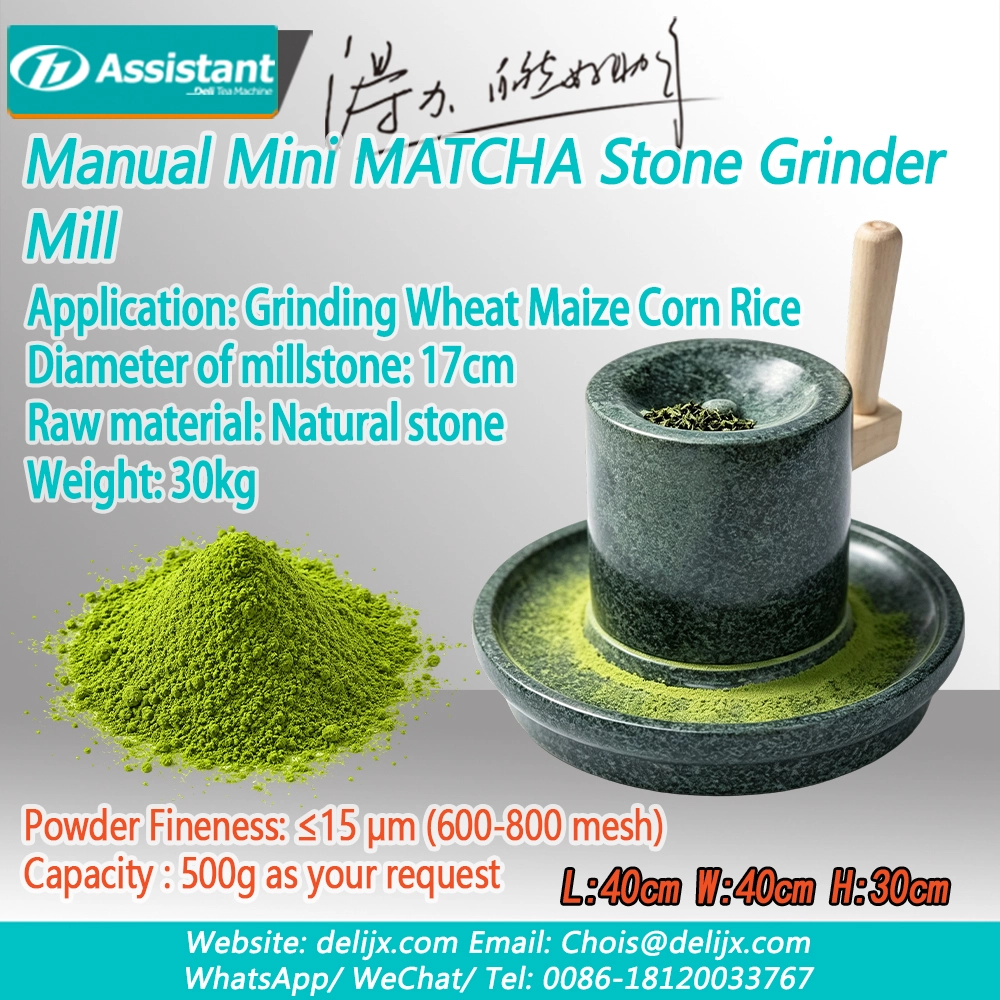
Manual Matcha Stone Mill es un molinillo manual tradicional hecho de piedra natural, diseñado para producir polvo de matcha fresco y auténtico. Con un proceso de molienda lento y baja generación de calor, ayuda a preservar el color, aroma y sabor natural de las hojas de té. Compacto y duradero, es ideal para cafeterías de matcha, casas de té, restaurantes, tiendas de experiencias culturales y producción de matcha en lotes pequeños.
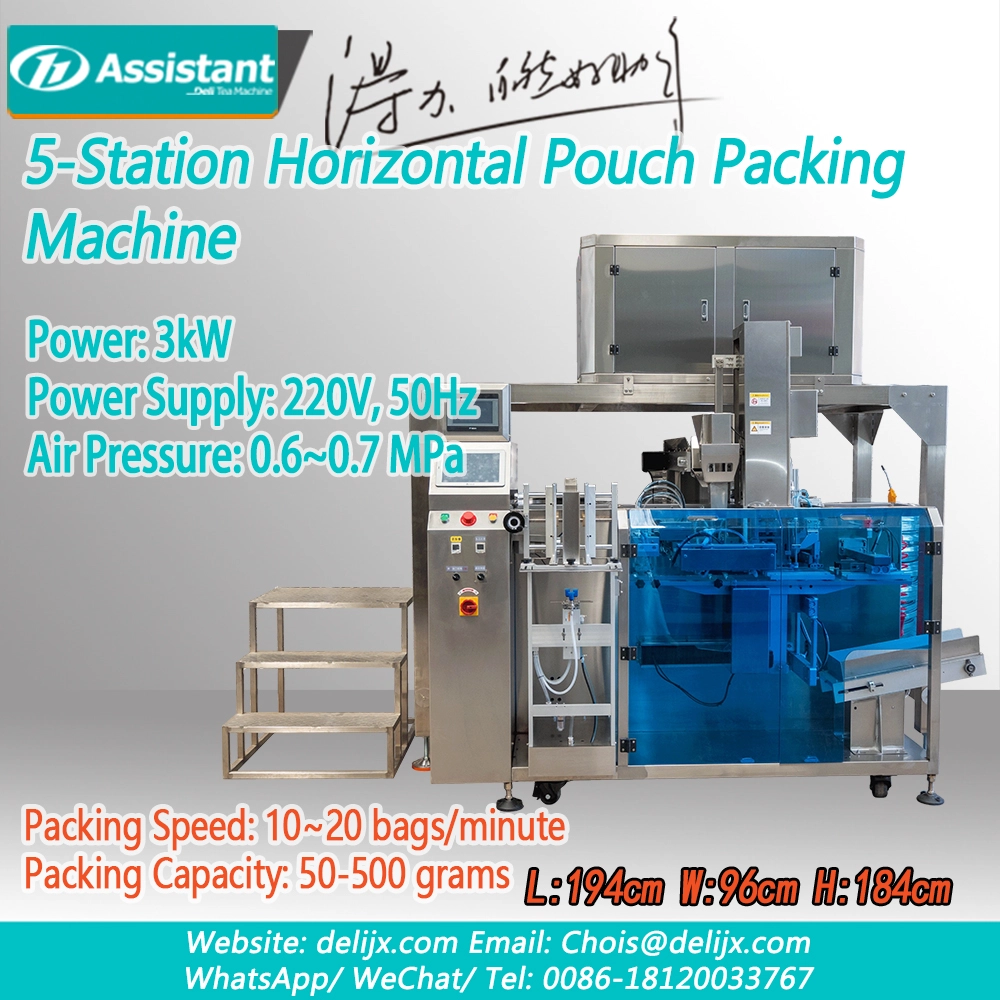
Esta máquina empacadora de bolsas horizontales de 5 estaciones maneja bolsas M, bolsas planas y bolsas con cremallera para materiales granulares de 50 a 500 g, como té. Termina automáticamente de pesar, llenar, aspirar y sellar con servocontrol y admite múltiples accesorios opcionales.
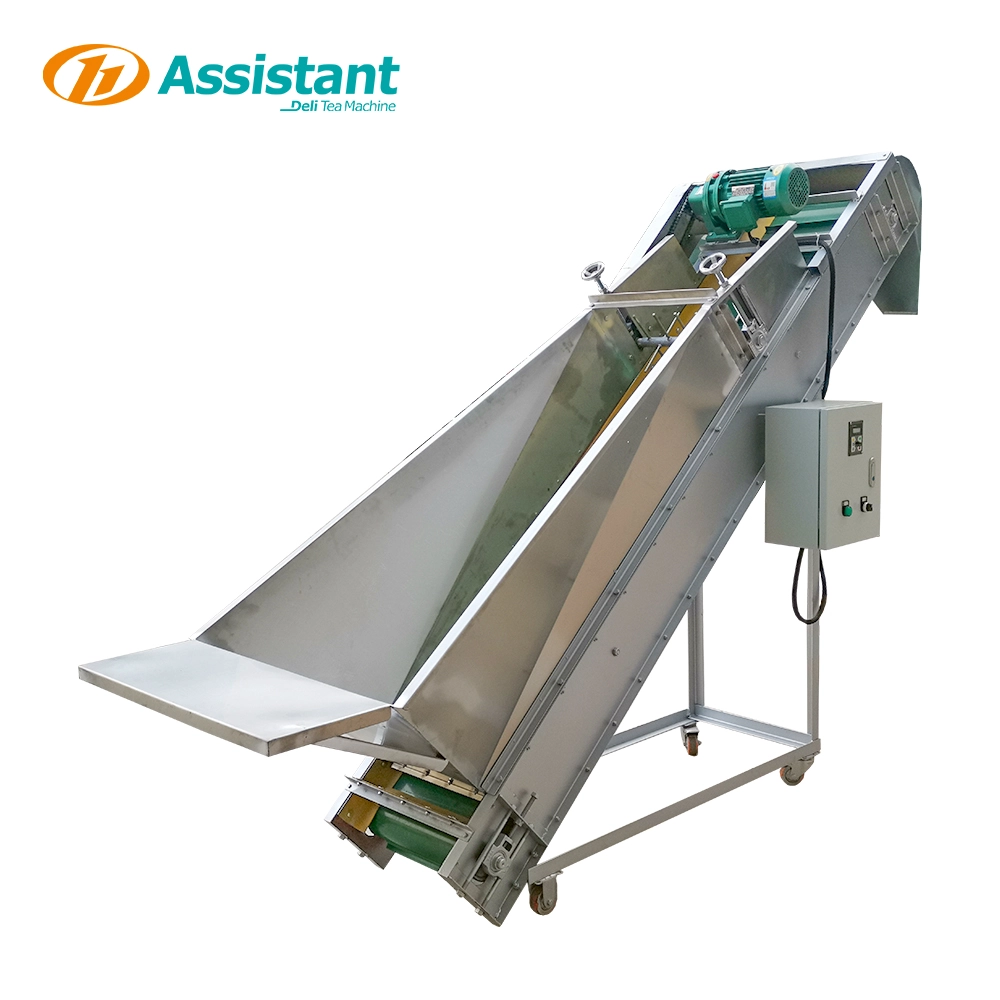
Nuestro transportador de alimentación de hojas de té de acero inoxidable es una cinta elevadora inclinada especialmente combinada con máquinas de fijación desenzimáticas de té. Cuenta con velocidad ajustable, correa deflectora antideslizante, alimentación estable, protege las hojas tiernas de té y aumenta en gran medida la eficiencia de la automatización de las fábricas de té.
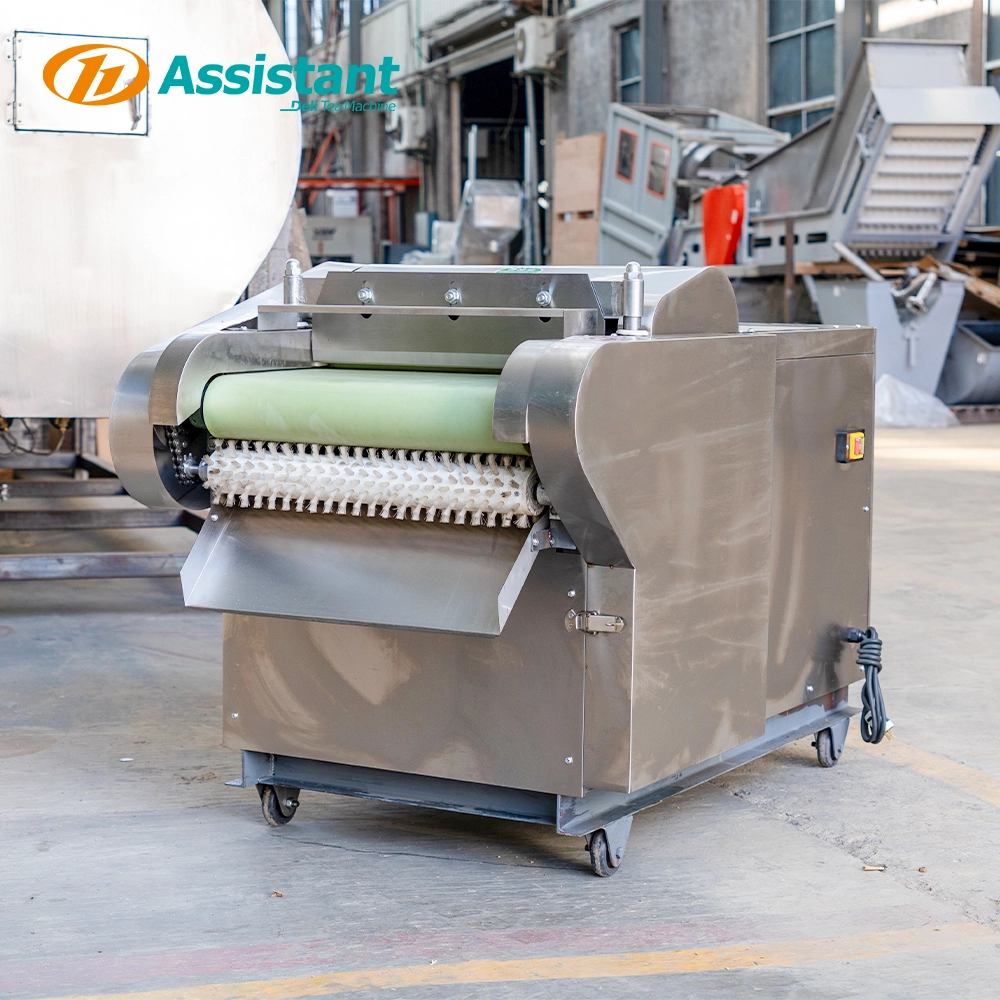
Cortadora de hojas frescas DL-6GCQ-50 con capacidad de 250kg/h. Cortador comercial de acero inoxidable para hojas de té, espinacas, albahaca, menta y verduras de hojas verdes. Conozca sus especificaciones, materiales adecuados, guía de operación y consejos de mantenimiento diario.
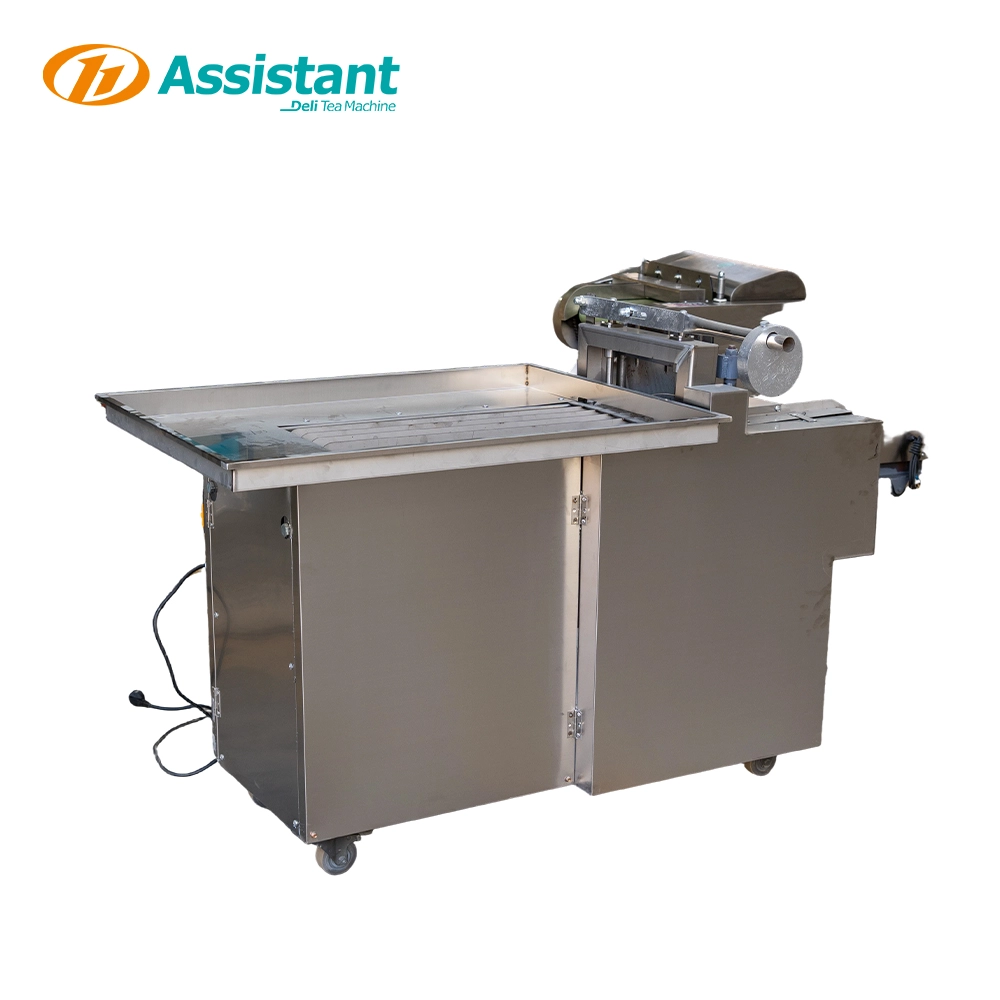
Nuestra máquina cortadora de hojas frescas tiene dos modelos DL-6GCQ-30 (150kg/h) y DL-6GCQ-50 (250kg/h). Estructura de acero inoxidable, opcional 220/380V, utilizada para cortar hojas de té frescas, hierbas y follaje en pequeños segmentos uniformes. Suministro directo de fábrica, rendimiento estable para líneas de procesamiento de té y hierbas.
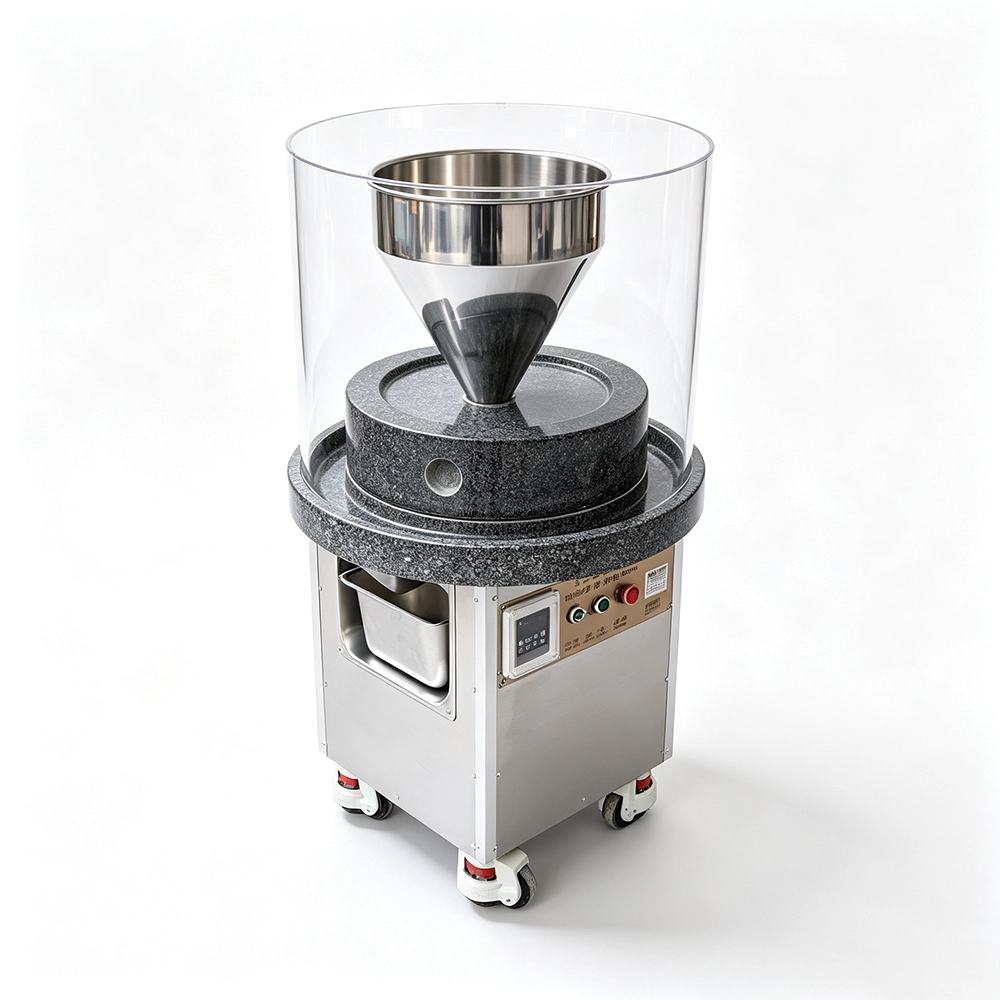
¿Busca el equipo de molienda de matcha adecuado? Lea nuestra comparación en profundidad de 4 molinillos de matcha, incluidos los molinos de piedra de oro negro, los molinos de piedra azul, los molinos de bolas por lotes y los molinos de bolas continuos. Conozca su eficiencia, distribución del tamaño de partículas y aplicaciones ideales.
Debido a que las hojas de té recién recolectadas tienen más humedad y el olor a hierba es más fuerte, deben colocarse en una habitación fresca y ventilada para que se marchiten. Después de marchitarse, el contenido de agua de las hojas de té se reduce, las hojas se vuelven blandas y el olor a hierba desaparece. y se revela el aroma de las hojas de té, lo que favorece el procesamiento posterior, como fijación, torsión, fermentación, etc. El color, el sabor y la calidad del té verde son mejores que el té sin marchitarse.
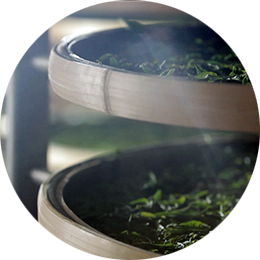
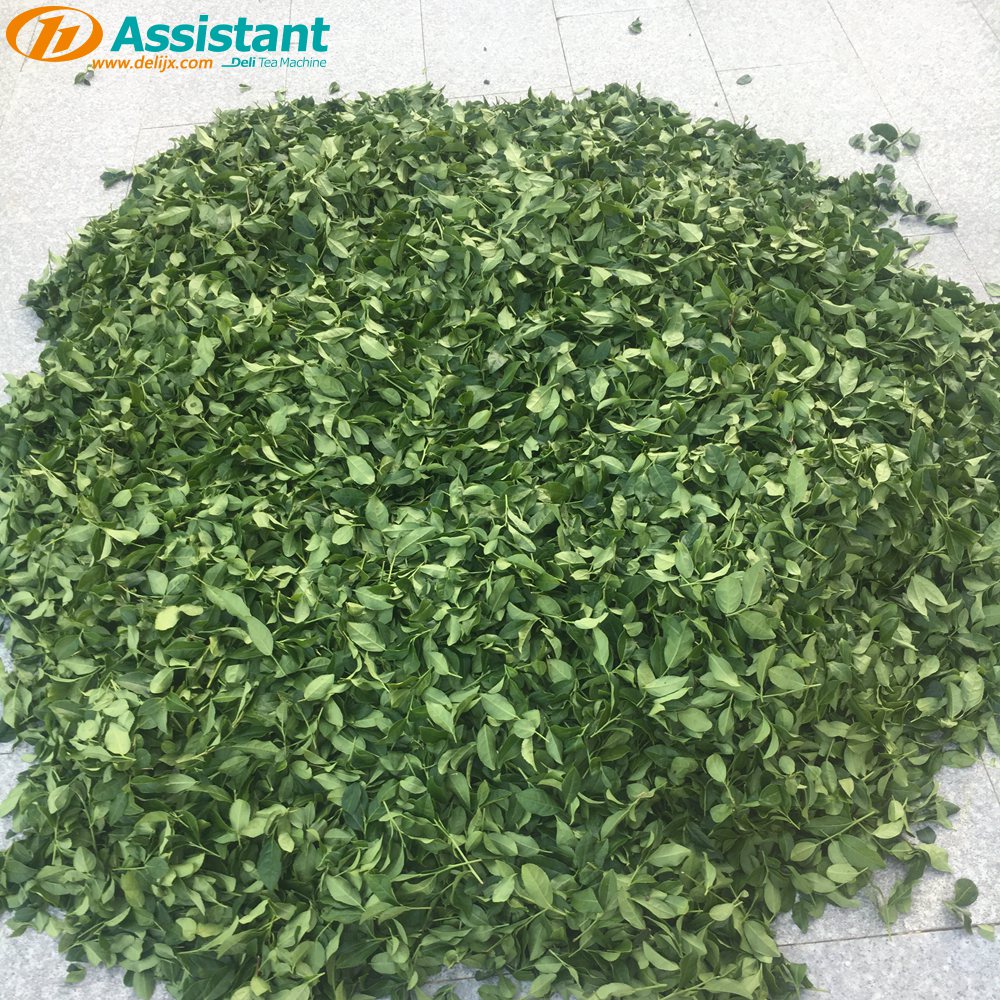
Spread out the tea leaves on the ground (need to lay a layer of plastic cloth, etc. to prevent tea leaves from directly contacting the ground). This method is the most primitive and the simplest method. Advantages: save money, less trouble, hardly need any input, about 2.5 kg/㎡ of tea leaves can be placed Disadvantage: It is only suitable for the production of small batches of tea. If large quantities of tea leaves are produced, the required space is very large; if it encounters rainy weather, it can only be placed in the room to wither.
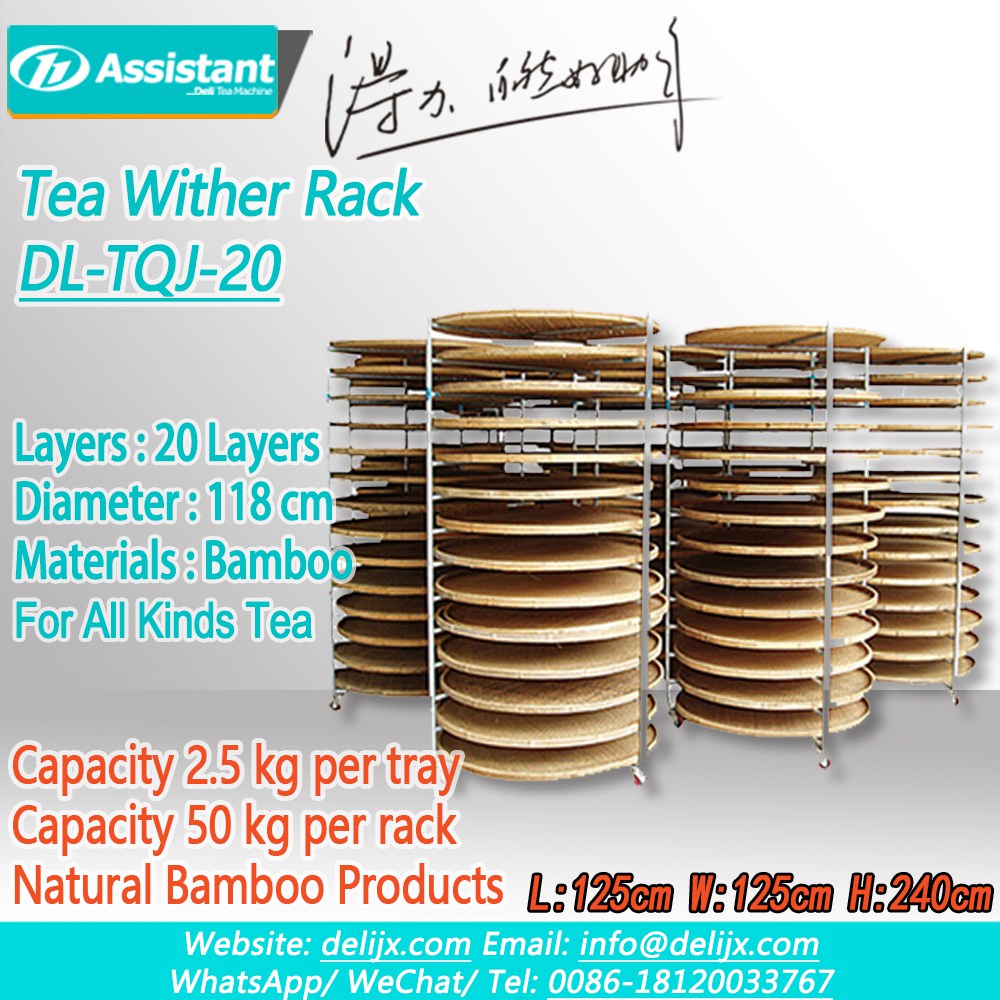
Place the fresh leaves on the withering racks, each withering rack has 20 layers, and each layer has a whole bamboo sieve tray. There are mesh holes on the sieve tray to facilitate air flow. At the same time, bamboo strips can absorb water, increase the rate of water evaporation, and accelerate the speed of tea leaves withering. Advantage: Small footprint; each withering tray can hold 2.5 kg of fresh leaves, and each shelf (about 1.2 square meters) can hold 50 kg of fresh leaves, which greatly saves space; at the same time, the withering tray is made of bamboo, which is clean, hygienic and environmentally friendly . There is a pulley at the bottom of the machine, which makes it easier to move.
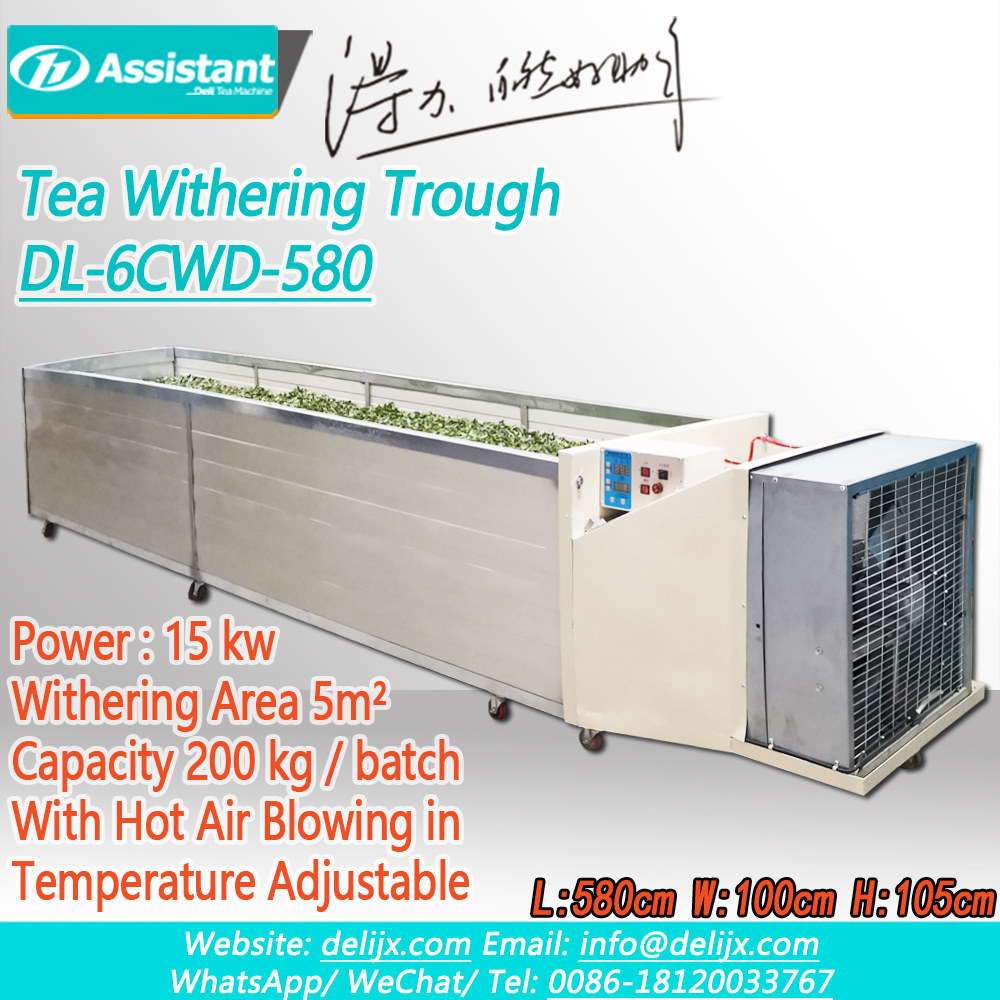
Put the fresh leaves on the withering machine. The withering machine can place 40 kg of tea leaves per square meter. The machine can blow air from the bottom of the tea leaves, which can adjust the temperature of the wind, greatly increasing the withering speed of the tea leaves. Advantages: Small area, hot air can be blown in, greatly improved the withering speed (efficiency increased by about 70%) Disadvantages: The machine needs to be heated, the power is about 15kw, and it needs to be connected to a 380V power supply.